On March 12, and 13th, 2026, we gathered at Northwestern University's Medill School of Journalism and Integrated Marketing Communications for the MediaEd Research Jam, and I am still feeling energized by everything that happened there.
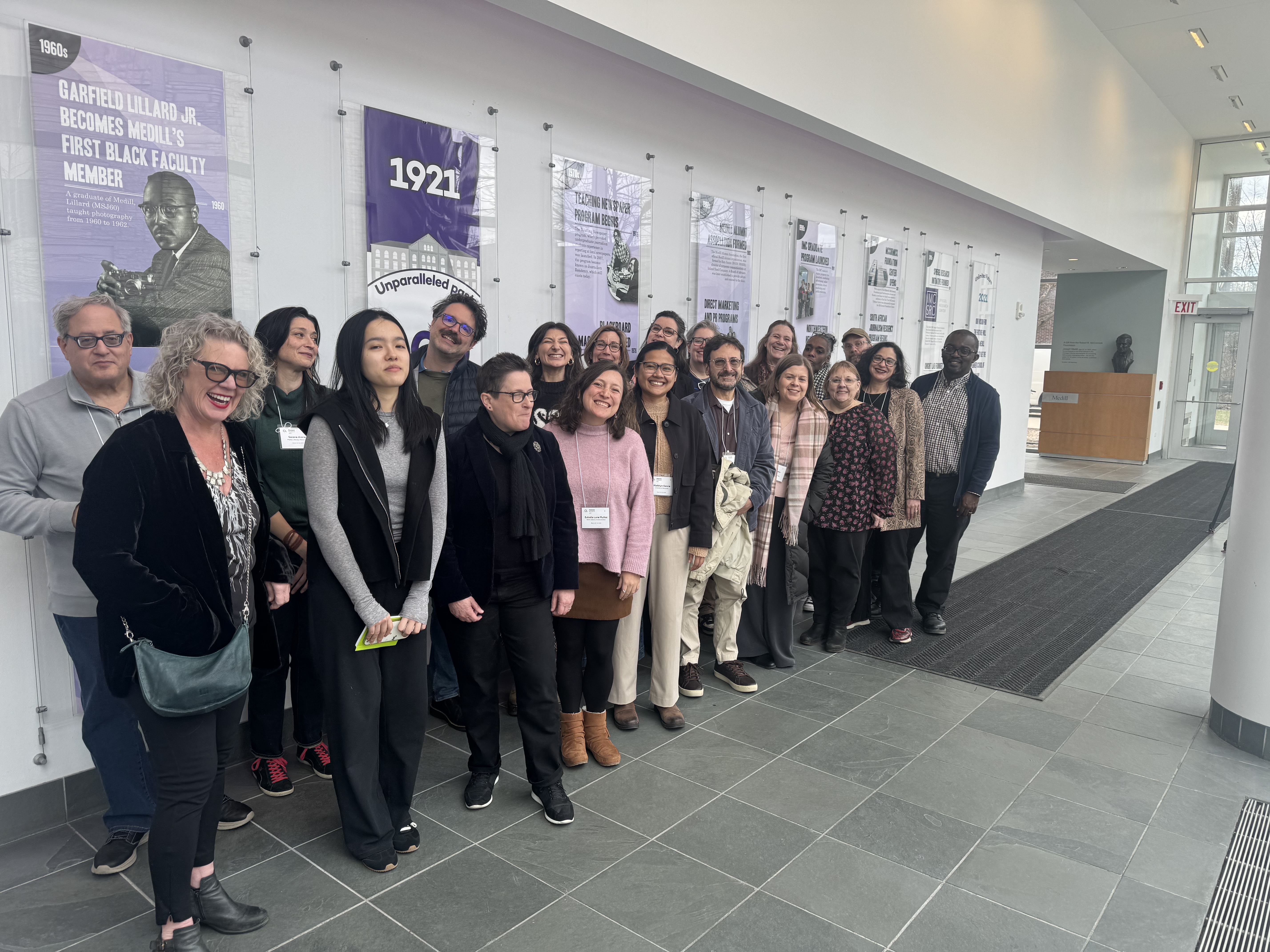 It was a real joy to help organize this event together with Michael Spikes, Anna Kozlowska-Barrios, Pamela Morris, and Jami Rhue. I want to share a heartfelt thank you to Michael Spikes, who was the main organizer of this gathering and who invited us into a great space at Northwestern University. Michael helped create the conditions for these two days to happen with such care, generosity, and vision. The MediaEd Research Jam was sponsored by both the Local News initative at Northwestern Medill and the Lumina Foundation. Michael's leadership made it possible for all of us to come together in this space and build something meaningful as a community.
What made this gathering feel so special was that it was not a typical academic conference. We were not asking people to come in with polished, completed research and simply present their findings. Instead, the whole idea of the MediaEd Research Jam was to create a collaborative space where people could share works-in-progress, test ideas, get feedback, and imagine future research together.
That difference really mattered.
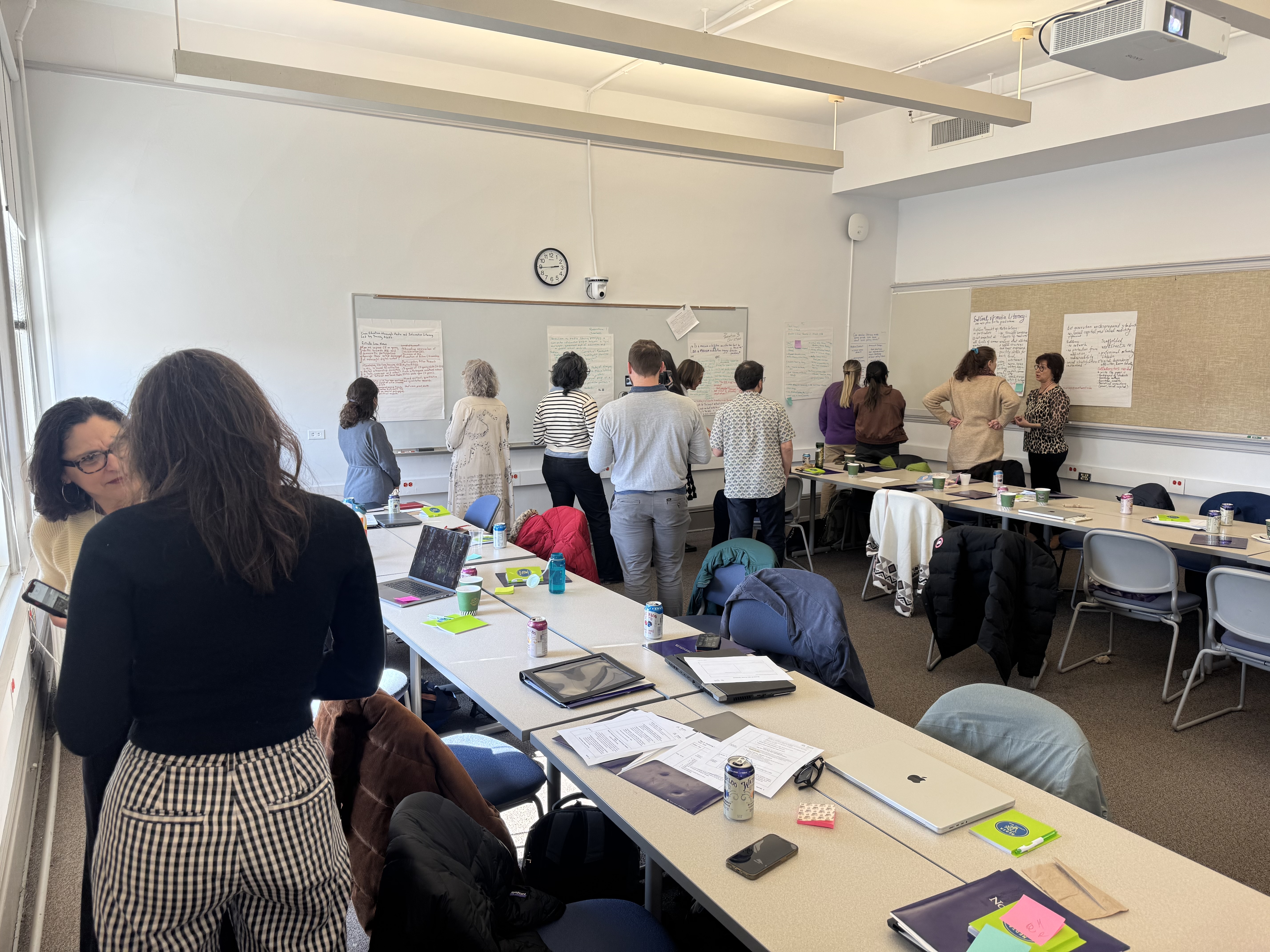 With 20 participants involved, we built the jam around speed pitching and a poster session so that everyone had the opportunity to share their project more than once, rethink it, and get feedback from others. That structure gave people time not only to present, but also to reiterate and refine their ideas as the conversations unfolded. You could really see projects evolving in real time.
One of the best parts was watching people discover common interests and begin forming partnerships. It was exciting to see new connections emerge among participants who care deeply about media literacy education but come at it from different angles. We had practitioners, scholars, graduate students, librarians, and teachers all in the same space, and that mix made the conversations especially rich. It allowed us to ask together: what do we want to do as media literacy experts in this moment?
To help guide the conversations, we organized the jam around three provocations:
What Counts as Media Literacy?
How We Assess Success in Media Literacy? Deconstructing Current Practice & Research
How Can Media Literacy Ethics Help Bridge Political Divides?
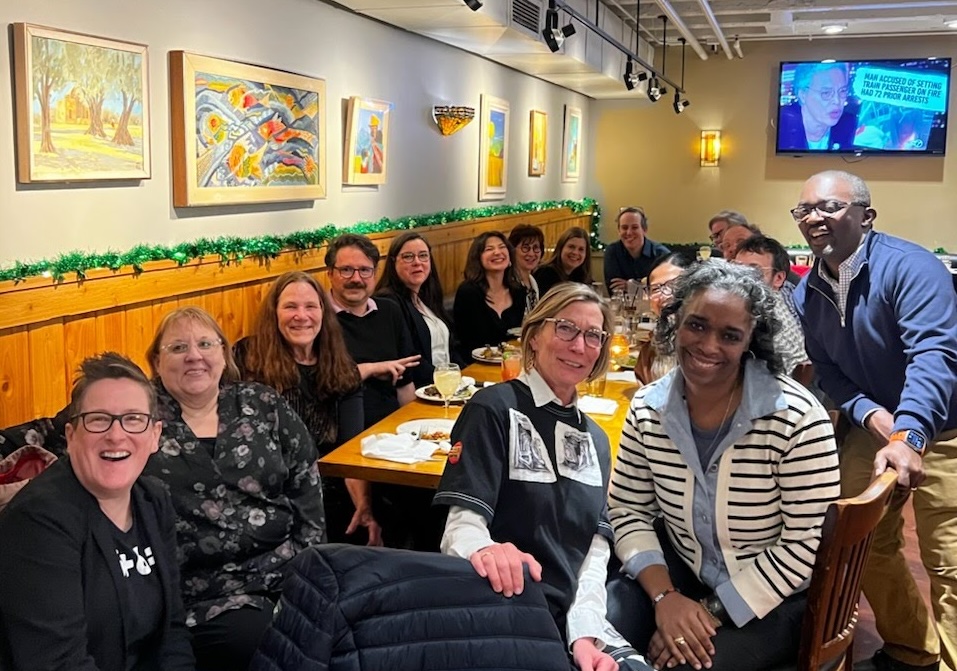 For me personally, it was really interesting to see how the idea of provocation worked as such a strong enabler for conversations, discussions, and deliberations. These questions helped us gather ideas, surface tensions, and push each other’s thinking forward. They also helped us develop both individual and collaborative projects that aim to move media literacy forward in these challenging times.
Over the two days, we were challenged, inspired, and pushed to think together in meaningful ways. One of the exciting outcomes is that we are now working toward an open-access publication that will summarize the discussions and the projects we brainstormed during the jam. I am especially excited about that because it means the work does not end when the event ends. The conversations will continue, and hopefully they will reach even more people.
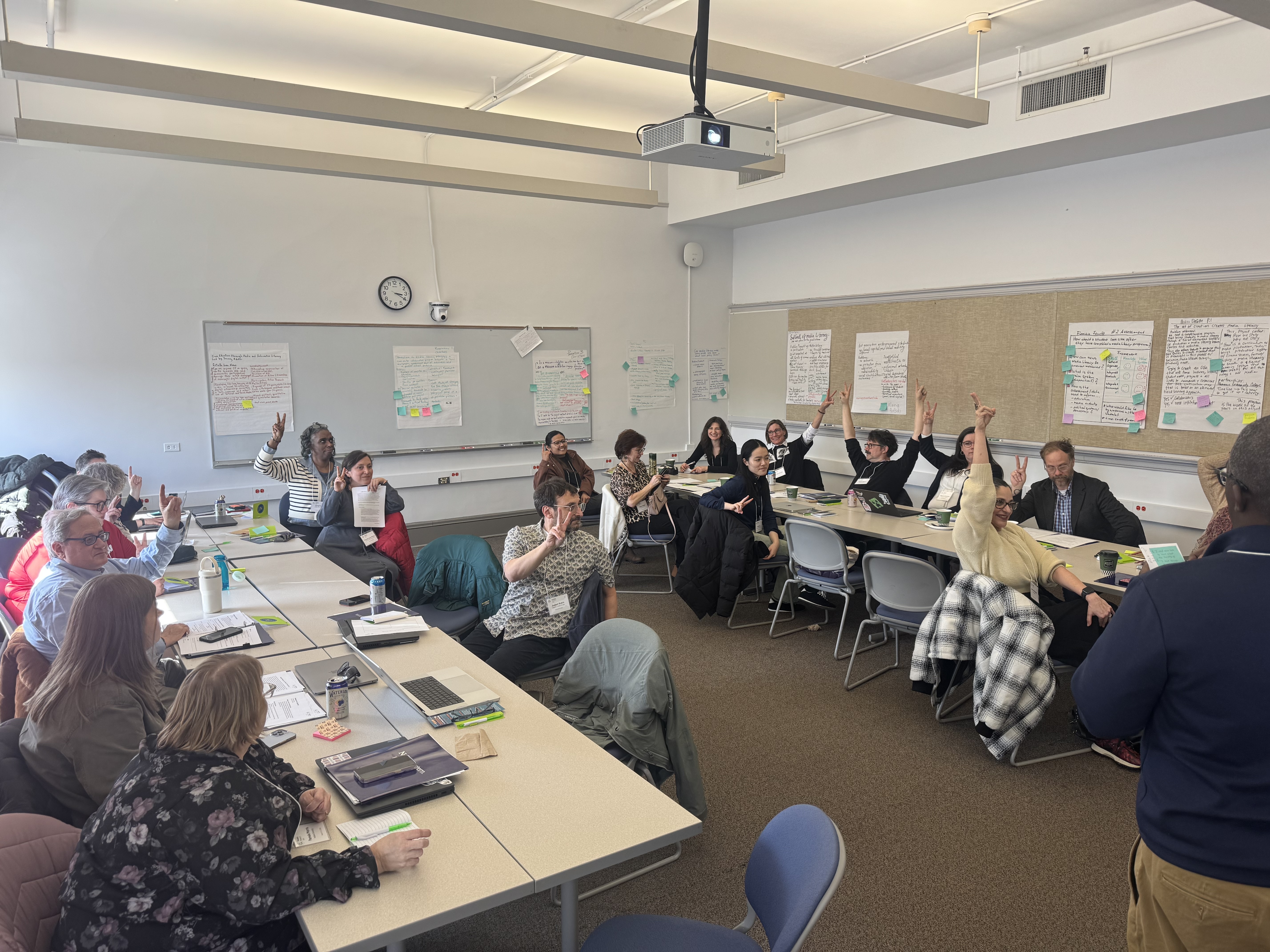 We closed the MediaEd Research Jam with a short hackathon of media literacy resources, where each participant shared resources with everyone else. It was a great way to end — practical, generous, and very much in the spirit of the whole event. At the end of this blog, we will include the list of online resources that were shared.
Personally, I left the Research Jam feeling grateful and hopeful. Grateful for the people who brought their ideas, openness, and energy into the room, and hopeful because it reminded me that collaboration is one of the strongest ways we can move media literacy education forward.
I already cannot wait for the third iteration of the MediaEd Research Jam next year.
Media Literacy Resources We Shared
Media Literacy Week. Organized by the National Association for Media Literacy Education (NAMLE), Media Literacy Week provides an opportunity to share work like the Indiana Media Literacy Week events organized by Pamela Morris at University of Indiana Columbus.
Teaching Communication, Volume IV: Instructional Resources. This volume contains more than 150 teaching resources such as syllabi, activities, assignments, and rubrics that can meet the needs of nearly any instructor style, institution, class size, course delivery format, and topic.
Wonder Media Library. This website is a digital version of the successful two-year run of the Wonder Media: Ask the Questions! interactive exhibition at the Kalamazoo Valley Museum in Kalamazoo, Michigan. This website features many fine resources like the project Whose Story Gets Told? and the game Escape the Fake.
Stop Fake. Media Reform Center at the Mohyla School of Journalism at the National University of Kyiv-Mohyla Academy developed this information hub that examines and analyzes Kremlin propaganda.
Free Press Media Literacy and Learning. Winnipeg Free Press has partnered with the Manitoba Government and the Winnipeg School Division in Canada to combine journalistic expertise with media literacy education, supporting schools across Manitoba and beyond.
Which Face is Real? Part of the Calling Bullshit project at the University of Washington, Jevin West and Carl Bergstrom developed this game to help people appreciate the ease with which digital identities can be faked, and to help you spot these fakes at a single glance.
The Spark Never Leaves You. This alumni study by Mindy Faber, Margaret Conway and Dennis Pierce from Convergence Design Labs examines the long-term impact of Spy Hop, a creative youth development organization serving young people in Utah since 1999.
All Sides. This organization provides curated collection of news stories from a left, center, and right perspectives.
Identify Claims. A sample video from Thinking Pro curriculum helps students learn to identify claims in an online learning program that adjusts to learning pace and ability level (8th grade and up).
Teens to Teachers: "We Got This." a blog by Joe Rubin on how teenagers see themselves as media literate.
Resource Library. Media Literacy Now showcases resources for media literacy education for health, well-being, economic participation, and citizenship.
Standards Crosswalk. The lllinois Media Literacy Coalition developed a concise resource page identifying key connections across the curriculum.
Comments(0)